If you run capital or sustaining-capital projects on an operating plant, you need a design that holds up under your maintenance reality, gets past your regulator and keeps your schedule.
Those are three separate risks, and a design can pass the first and fail the other two. Here is how we work against each.
Maintenance reality
A design that can only be serviced during a full plant shutdown is a design that does not get serviced. We ask early what your crew actually does in-house, what they contract out, and what their isolation practice looks like — then we sectionalise distribution and lay out equipment so routine work can happen without taking the process down.
That means working clearances that reflect the tools your millwrights actually use, isolation points where the maintenance procedure needs them rather than where the single-line was tidiest, and arc flash labelling to CSA Z462 that gives the crew a usable boundary rather than a warning they will work around.
Getting past the regulator
Industrial work carries a regulatory load that commercial work does not. We design to be defensible on submission — complete calculations, documented assumptions, and coordination studies that show the protection scheme does what the narrative says it does.
Every deliverable is reviewed by a second engineer before it is issued. Most of the value of that second review shows up here: at the point where a reviewer, an inspector or a regulator is looking for the gap.
Not blowing the schedule
Schedule risk on industrial projects is usually procurement risk in disguise. Long-lead switchgear, transformers and custom equipment set the critical path, and a design that specifies them late — or specifies something with a fifty-week lead when a forty-week equivalent would serve — costs the owner months.
We flag long-lead items early and design tie-ins around the shutdown windows you actually have, not the ones the schedule assumes you can create.
What we do here
- Power distribution, service upgrades and capacity studies for expanding plants
- Protective device coordination, short-circuit and arc flash studies
- Power quality — harmonic analysis and mitigation on variable-frequency-drive-heavy plants
- Grounding grid and loop design, step-and-touch potential assessment
- Process support systems: compressed air, water systems, pumping and ventilation
- Motor schedules and load lists coordinated across electrical and mechanical
- Forensic investigation after equipment failure
Both electrical and mechanical disciplines run in-house, which matters more on industrial work than anywhere else — motor loads, drive selection, cooling and control interlocks get coordinated internally instead of across a gap between two firms.
Selected work
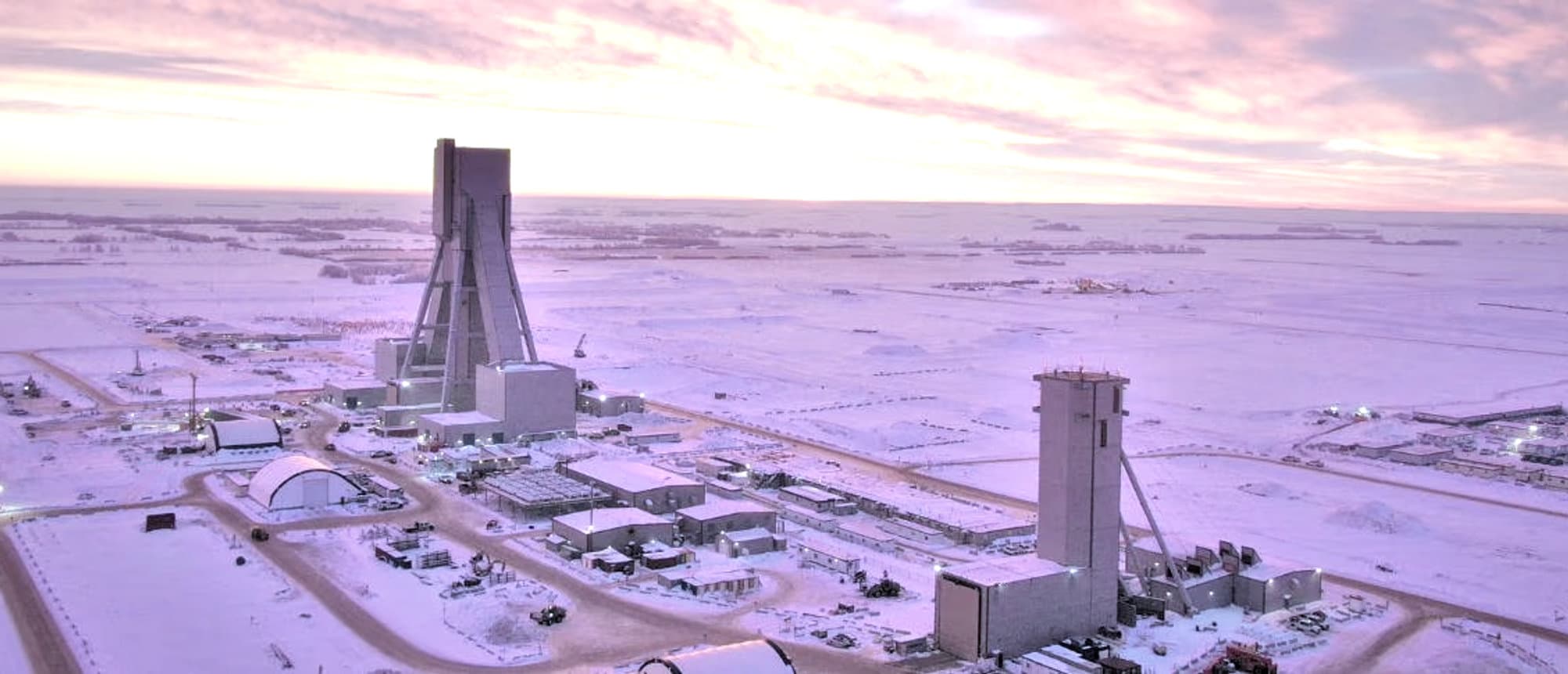
Modular E-House and 4.16 kV pump stations at a potash mine — One prefabricated E-House and three booster pump stations with 4.16 kV switchgear, designed and coordinated across the building fabricator, switchgear OEM and pump vendors, with support through commissioning.
Post-fire electrical and mechanical restoration at a greenhouse producer — Assessment, design and construction management on the owner's behalf after a fire took out the distribution and mechanical plant of a production facility.
Expertise
Power system studies · Arc flash studies · Load flow and motor starting studies · Protective device coordination
Talk to us about your project
Send us the scope, the shutdown window and the regulator you are answering to. We will tell you plainly whether we are the right firm for it.